
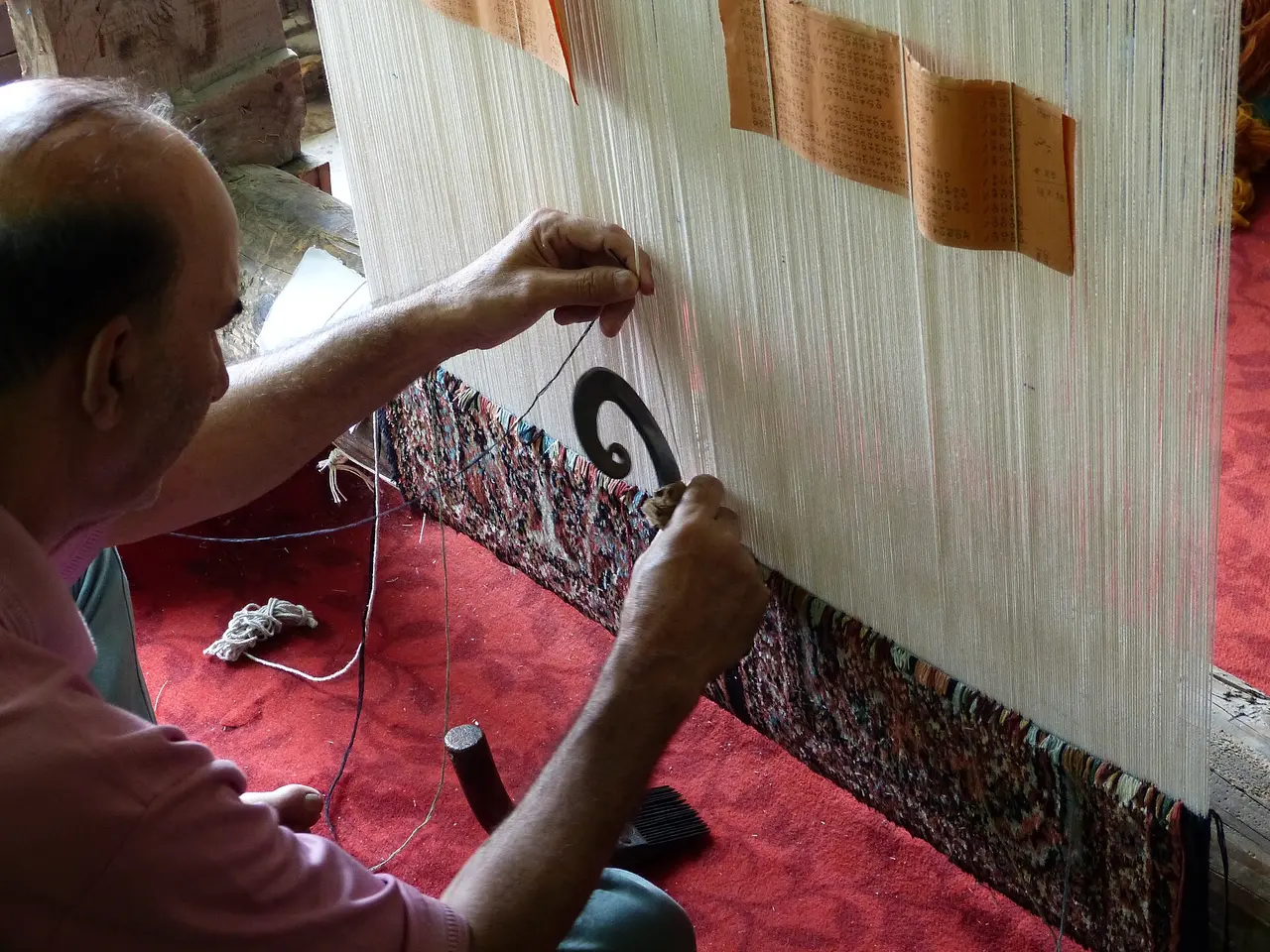
Carpets: look at the back. Hand-knotted work shows irregular, dense knots. Ask what it is made of, and assume a mix until someone shows you the yarn. A higher knot count usually means a finer carpet and a longer time on the loom. It does not, by itself, mean you should buy it.
Pashmina: real pashmina is the underwool of a changra goat, and a finished shawl is light, warm and expensive for a reason. The “ring test” you will be shown — pulling a shawl through a ring — is a parlour trick that some fine woven pieces fail and some blends pass. Look at the fibre, the drape and the seller’s willingness to tell you the fibre on a bill. A GI mark is meaningful when it is genuine. A sticker is not a laboratory.
Papier-mâché: the good pieces are light, the paint is fine, and the inside is finished rather than raw grey pulp. Very cheap, very shiny nesting boxes in a hotel lobby are souvenirs. That is allowed, if you know that is what they are. A workshop visit is worth more than a speech about the Mughals.
When
Any time you are not rushed. The worst buy is the one made while a taxi meter, real or imaginary, is running.
Where
Workshops in the old city are the right neighbourhood. A showroom your driver discovered is the wrong one until you have seen two others. This page names no shop, on purpose.
Doing it well
- Decide a ceiling before you sit down for tea.
- Ask for the fibre or the knot count in writing on the receipt.
- Walk away. The piece will usually still be there in an hour. The “last one” rarely is.
Skip these versions
- Buying saffron, a carpet and a shawl from the same counter on day one.
- Trusting a certificate you cannot read and were not allowed to photograph.